

The #1 No Nonsense Guide to VAT on Window Shutters & Blinds
Updated January 2026
TL;DR
- Most shutters and blinds carry standard rate VAT at 20%. On a new build, manually operated shutters and blinds can effectively escape that VAT, because HMRC now treats them as ‘building materials’ incorporated into the home.
- We charge VAT in the normal way. We do not zero-rate, and there is a good reason for that (below). On a new build a VAT-registered developer or builder who buys from us reclaims that VAT on their return. On a private self-build the relief usually runs through your VAT-registered builder or main contractor, who buys from us and reclaims it; if you buy direct as an individual, take advice first, as the self-build DIY scheme does not always cover it.
- The relief applies to manually operated products only. Motorised and battery products are electrical appliances and stay at 20%. In practice that excludes most of what we supply, because the vast majority of our internal blinds, and almost all of our external shading, are motorised.
- The blinds must be fitted before the home is signed off as complete (the completion certificate). Fitted after completion, normal 20% VAT applies to everyone.
- Here is the catch. Our products are made to measure and can only be measured accurately once the finished surfaces are in, and they then take 8 to 10 weeks to make. So the build’s completion usually has to be timed, and sometimes delayed, so the blinds go in before the certificate is issued.
- Is it worth it? For a developer, reclaiming the VAT is routine. For a private homeowner it is harder than it looks: your builder has to be the buyer, and your guarantee then sits with them, not you, and does not transfer to you as the eventual owner. Keeping your guarantee in your own name is often worth more than the 20%.
- Either way, plan your window shading early and talk to us at the design stage, and we will give you the plain picture for your build.
Most of the time, window shutters and blinds carry standard rate VAT at 20%. But if you are building a new home, or having one built, there is an important exception that can remove that VAT entirely on the right products, fitted at the right time.
Since 2021, HMRC has accepted that manually operated blinds and shutters are ‘building materials’. When they are built into a qualifying new home during its construction, the VAT can be recovered. In July 2025 HMRC confirmed the same treatment extends to manual external shading: external blinds, awnings and canopies.
This guide explains how the relief actually works in practice, and where it stops. It reflects the British Blind and Shutter Association’s Guidance Note A2 (Issue 7, August 2025), which was peer reviewed by Croner, Philip Barnes & Co and Constable VAT Consultancy.
How the relief works with us
There are two ways the industry handles this VAT. A supplier who both supplies and fits can, in some cases, zero-rate their own invoice. Our policy is that we do not zero-rate. We charge VAT in the normal way, and the VAT is then recovered by the party who is building the home.
There is a sound reason for that. Zero-rating stands or falls on the products being fitted before the home is complete. Because our blinds are made to measure, can only be measured accurately once the finished surfaces are in, and then take 8 to 10 weeks to make, the fit lands right at the end of the build, where the risk of slipping past completion is real. If that happens, a zero-rated invoice becomes the wrong invoice, and HMRC recovers the VAT from whoever applied the relief. Charging VAT in the normal way keeps everyone’s position clean and certain, and lets the party who actually controls the build timing carry the recovery.
- A property developer or builder buys the blinds from us, pays the VAT, and reclaims it as input tax, because the blinds are building materials incorporated into a new home that they will sell zero-rated. This is the route confirmed by the Wickford tribunal (below).
- On a private self-build, the cleanest way to secure the relief is to have the blinds bought and installed through the VAT-registered builder or main contractor running your project. They buy from us, reclaim the VAT, and their work on your new home is zero-rated. If instead you buy directly from us as a private individual, we charge VAT in the normal way, and you should take advice from your accountant first, because the self-build DIY reclaim scheme does not always cover this kind of supply.
Either way, the essential conditions are the same, and they come down to two words: manual and timing.
Manual only
The relief applies to manually operated shutters and blinds. Motorised and battery-operated products are classed by HMRC as electrical appliances, are not ‘building materials’, and remain standard rated at 20%.
In practice this rules out most of what we supply. The vast majority of the internal blinds we fit, and almost all of our external shading, are motorised, so the great majority of our work falls outside the relief before any of the other conditions even come into play.
There is a narrow nuance. Where a motor is a genuinely separate unit that can be distinguished from the blind, HMRC accepts that an apportionment can sometimes be made, so the manual element might qualify while the motor and controls stay at 20%. Where the motor is integral and the product cannot function without it, the whole product is standard rated. This is a grey area and should be confirmed with HMRC.
Now includes external shading (July 2025)
Following further correspondence with HMRC, it was confirmed on 28 July 2025 that manual external awnings, external canopies, external roller blinds and external venetian blinds are also treated as building materials. So the same opportunity now applies to manual external shading on a qualifying new build, not just internal shutters and blinds. Motorised external shading does not qualify.
Timing is everything: before the completion certificate
This is where new builds live or die for VAT. The relief only applies while the home is genuinely ‘in the course of construction’. Once it is signed off as complete, works to it no longer qualify, and standard 20% VAT applies to everyone. HMRC weighs up several factors to decide when a home is complete, including whether the completion certificate has been issued, whether it matches the approved plans, and whether it is occupied, but the completion certificate is the usual marker.
So the blinds must be installed before the completion certificate is granted. If a home is finished, certified and occupied, and the owner then decides on window coverings, that is a standard 20% job like any other.
The real sticking point (and why you must plan early)
Here is the practical trap that catches people out.
Our products are made to measure, and they can only be measured accurately once the finished surfaces are in place: plaster, window boards, reveals and flooring. That point is close to the end of the build. Our blinds are then manufactured to a lead time of 8 to 10 weeks.
Put those two facts together and the timing is tight. To keep the VAT relief, the blinds have to be measured late, made, and installed before the home is certified complete. In practice that often means the completion sign-off has to be timed, and sometimes deliberately delayed, so the blinds are in first. If completion cannot wait, the relief is lost and standard VAT applies.
This is exactly why we ask self-builders and developers to talk to us at the design stage. Getting the sequence right at the start is what protects the saving, where it is worth pursuing.
Our two services, and how VAT sits with each
- Full measure and install (our main service). We measure once the finished surfaces are in, manufacture, and fit before completion. On a new build this is the route that carries the VAT relief, with the developer, or the self-builder’s VAT-registered builder or main contractor, recovering the VAT as described above.
- Self-measure and self-install (occasional, supply only). For this we only work with homes that already have their completion certificate, because custom products can only be measured safely once the house is finished. A supply-only sale is always standard rated at 20% and carries no new-build relief. It is a normal purchase like any other.
Is it worth it? The plain reality
For a property developer building homes to sell, reclaiming the VAT is routine, and a developer handles aftercare as part of selling a finished home, so the eventual buyer has someone to go to. If that is you, little of what follows is a problem.
For a private homeowner or self-builder, be realistic before you chase the saving, because getting it means several things all lining up, and each is a barrier:
- You cannot reclaim it yourself. Buy direct from us as a private individual and the VAT stays at 20%. The self-build DIY reclaim scheme generally does not cover a supply-and-fit that should have been zero-rated during construction.
- Your builder has to be the buyer. Because we do not zero-rate (see above), the only way to capture the relief on our products is for your VAT-registered builder or main contractor to buy them and reclaim the VAT. That makes the blinds their purchase, not yours.
- Your guarantee goes with the buyer, and it does not transfer. Our guarantee is with the person who bought the blinds and is personal to them. It does not pass to a later owner. So if the builder is the buyer, and three or four years on a mechanism or a slat needs attention, that claim runs back through the builder, not directly with us. If the builder has moved on or wound up, you can be left without a direct guarantee from us. A guarantee being personal to the original purchaser is normal and lawful, but on a new build it means the VAT route and your own aftercare pull in opposite directions.
- The timing is unforgiving. As above, we measure late and make to an 8 to 10 week lead time, so completion often has to be delayed just to fit before sign-off.
- Get any of it wrong and HMRC recovers the VAT anyway.
Put plainly: for most private homeowners the saving is hard to capture and comes with real strings, and keeping your guarantee in your own name is often worth more than the 20%. We would rather tell you that straight than sell you a saving that quietly unravels a few years later. If you are working with a developer or a main contractor who will handle the VAT properly, it can be well worth having, and we are glad to help you get the timing right.
"It took HMRC years to accept that a manual blind is a building material, and even now they have wrapped the relief in so many conditions that, for most homeowners, it is more headache than saving. Miss the timing by a week and it is gone. My honest advice is to go in with your eyes open, and to remember that having your blinds in your own name, with our guarantee behind them, is usually worth more than the VAT."
David Browne, Project Director & Co-Founder
What does not qualify
- Motorised and battery products, as above, remain standard rated (subject to the narrow apportionment point).
- Curtains are still not treated as ‘ordinarily incorporated’, so they remain standard rated.
- Fly screens classified as fly screens rather than blinds are not eligible.
- Anything fitted after the completion certificate.
The Wickford ruling: where this came from
The change followed a First-Tier Tribunal case, Wickford Development Co Ltd v HMRC, decided in 2020. The Tribunal found that manual window blinds are goods ‘ordinarily incorporated by builders in properties built as single-family dwellings’, and that HMRC’s earlier distinction between blinds and curtain poles was illogical. HMRC accepted the decision, which took effect from 5 October 2020, and updated its policy in Revenue and Customs Brief 5 (2021), announced on 11 May 2021. The 2025 confirmation extended the same logic to manual external shading.
Further information
VAT on construction is genuinely complex, and the treatment can turn on the type of building, the timing, who the customer is, and whether the work is for a developer or a private self-build. This guide is general information, not tax advice. For your own position, and especially on a private self-build, check with HMRC or your accountant. We are members of the British Blind and Shutter Association and are happy to talk through how the timing works for your build.
Frequently Asked Questions
Do you pay VAT on window shutters? Yes, window shutters are subject to standard rate VAT (20%) in most cases. The exception is on a qualifying new build, where manually operated shutters that are built in before the home is completed can be treated as building materials, and the VAT recovered by the VAT-registered developer or contractor building the home. This followed the Wickford Development Co Ltd tribunal ruling in 2020.
How does the VAT relief on new builds actually work? Manually operated blinds and shutters are treated as ‘building materials’ when they are incorporated into a qualifying new home during its construction. The Scottish Shutter Company charges VAT in the normal way and does not zero-rate. On a new build a VAT-registered developer or builder who buys from us reclaims that VAT as input tax. On a private self-build the relief usually runs through the VAT-registered builder or main contractor rather than the homeowner buying direct, so it is worth taking advice from your accountant. The products must be manually operated and fitted before the completion certificate is granted.
Can external awnings and canopies get the relief on a new build? Yes. In July 2025 HMRC confirmed that manual external blinds, awnings and canopies are treated as building materials in the same way as internal blinds and shutters, provided they are manually operated and fitted during the construction of a qualifying new build. Motorised external shading does not qualify.
Do motorised blinds qualify? No. HMRC classes motorised and battery-operated products as electrical appliances, not building materials, so they remain standard rated at 20%. Where a motor is a separate unit, an apportionment can sometimes be made so the manual element qualifies, but this should be confirmed with HMRC.
Why do the blinds have to be fitted before completion? Because the relief only applies while the home is ‘in the course of construction’. Once the completion certificate is issued and the home is signed off, works to it are standard rated at 20%. Blinds fitted after that point do not qualify, whoever supplies them.
Why might completion need to be delayed? Our products are made to measure and can only be measured accurately once the finished surfaces are in, which is near the end of the build. They then take 8 to 10 weeks to manufacture. To fit them before the completion certificate is granted, the sign-off sometimes has to be timed or delayed so the blinds go in first. This is why planning window shading early matters.
Can I claim back VAT on shutters for a self-build home? The relief on a self-build is easiest to secure when the blinds are bought and installed through the VAT-registered builder or main contractor running your project: they buy from us, reclaim the VAT, and their work on your new home is zero-rated. If you buy directly from us as a private individual, we charge VAT in the normal way, and the self-build DIY reclaim scheme does not always cover this kind of supply, so take advice from your accountant before you order.
Does the relief apply to blinds fitted after moving in? No. It only applies when the products are fitted during the construction of a qualifying new build, before completion. If you move into a finished home and then decide on window coverings, standard 20% VAT applies, whether the blinds are manual or motorised.
Will I lose my warranty if my builder buys the blinds to get the VAT relief? Our guarantee is with whoever buys the blinds, and it is personal to them, so it does not transfer to a later owner. If your builder is the buyer, the guarantee sits with the builder, and any future claim would go back through them rather than directly to us. For many homeowners, keeping the guarantee in their own name can be worth more than the one-off VAT saving, so it is worth weighing up before you decide who should buy.
The information in this guide is general and not a substitute for advice on your specific circumstances. For your own position, check with HMRC or your accountant.
January 2026
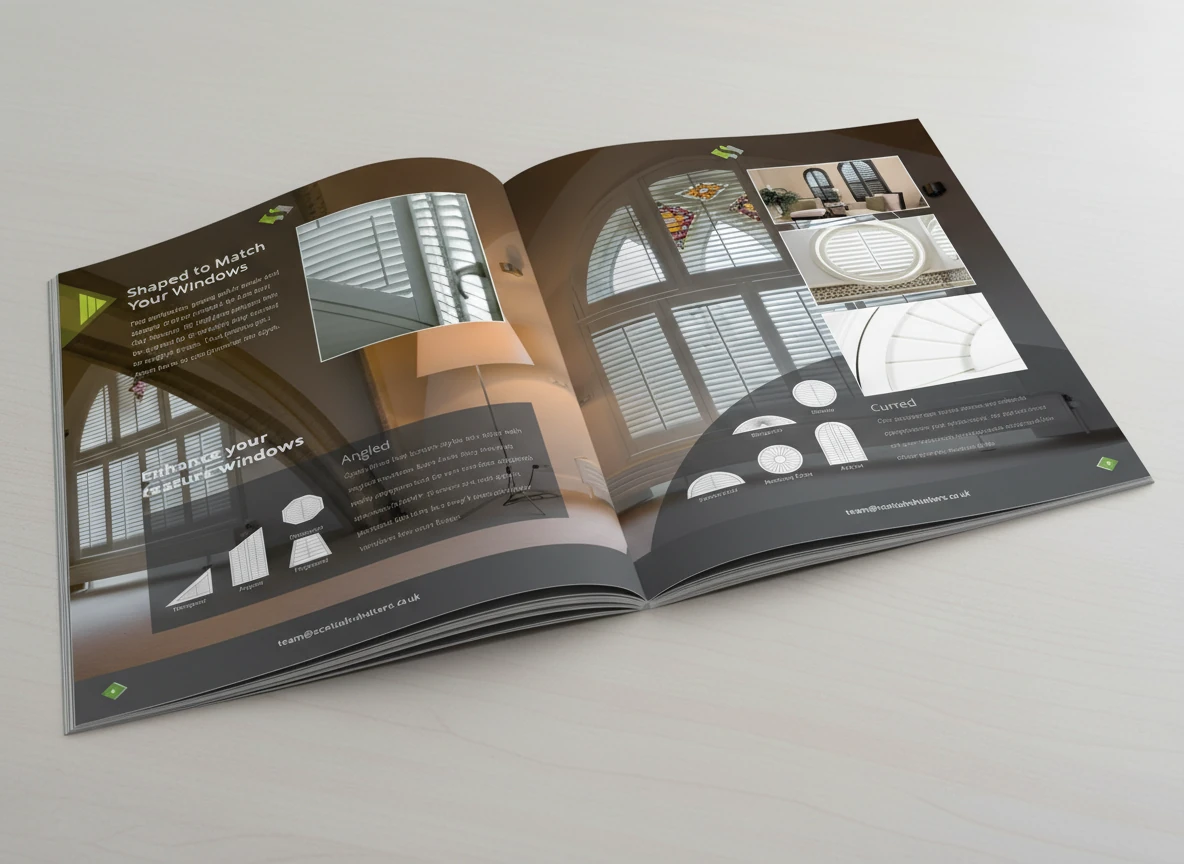
Inspired by what you've read?
Request a brochure or arrange a no obligation consultation.