
Shutter Styles
Solid panel shutters
The original interior shutter. No louvres, no moving parts within the panel. Just solid, beautifully finished hardwood that has been a feature of British homes for over two hundred years. You will also see them called solid shutters, solid window shutters or panelled shutters, and in Scotland pocket shutters or case shutters. They are all the same thing.
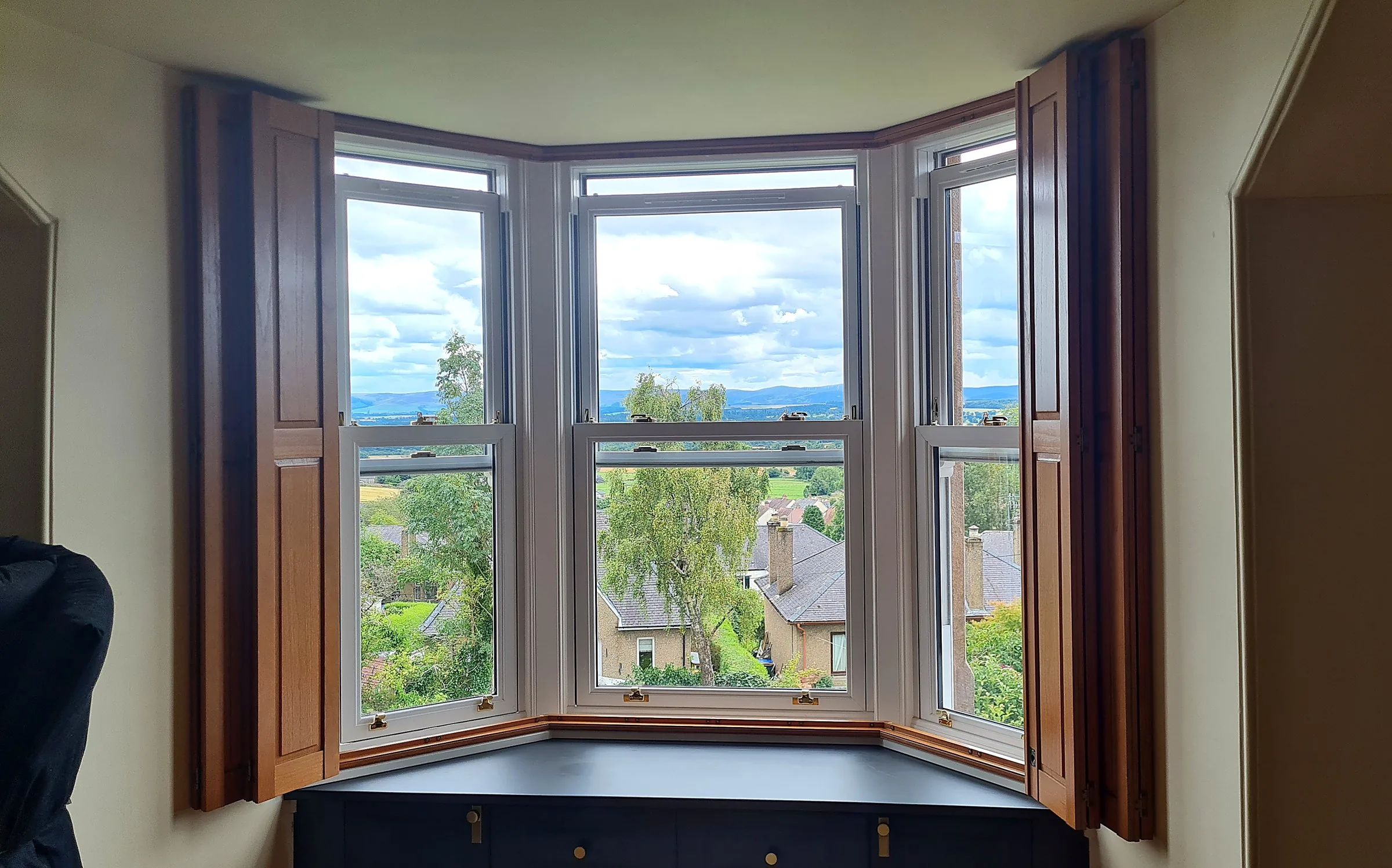
Over two centuries of heritage
Long before louvred shutters became popular, solid panel shutters were a standard feature of well-built British homes. Step inside any Georgian or early Victorian property and you will often find the original solid shutters still in place, folded neatly into the window reveals where they have sat for generations.
These shutters served a practical purpose. Before central heating and double glazing, a solid wooden panel across the window provided essential insulation against draughts and cold. They also offered security, privacy and protection from the elements in a way that curtains alone could not.
Today, solid panel shutters are chosen as much for their aesthetic qualities as their practical ones. There is a weight and presence to a solid panel that louvred shutters simply cannot replicate. The flat, uninterrupted surface has a quiet authority that feels appropriate in period interiors.
For homeowners restoring a Georgian or Victorian property to its original character, solid panel shutters are often the most historically authentic choice.
The most complete room darkening of any shutter
Because there are no louvres, solid panel shutters darken a room more completely than any other shutter style. When the panels are closed, no light passes through the shutter itself. The only light that enters the room comes from the narrow gaps around the frame edges, which can be minimised with careful measuring and installation.
This makes solid panel shutters an excellent choice for bedrooms, particularly those that face streetlights, early morning sun or neighbours' security lighting. In Scotland's summer months, when true darkness lasts only a few hours, the ability to properly darken a bedroom can make a meaningful difference to sleep quality.
Nurseries and children's bedrooms are another common application. Young children often struggle with the long summer evenings, and solid panel shutters create a clear distinction between daytime and bedtime that helps establish good sleep routines.
It is worth being precise about what this means. A solid panel darkens a room more thoroughly than a louvred shutter can, because there are simply no gaps between louvres for light to find its way through. It is not a blackout system. If genuine near-total darkness is the requirement, that is a different product: a side-channel blackout blind with light-blocking side rails and a sealed head cassette. We will tell you which of the two your room actually needs before you commit to either.
An additional layer of insulation
Solid panel shutters provide a continuous barrier of hardwood across the window opening when closed. This acts as an additional layer of insulation, trapping a pocket of still air between the shutter and the glass that helps to reduce heat loss.
In older properties with single glazed windows, this insulating effect can be particularly noticeable. The solid panels reduce draughts, dampen noise from outside and help to maintain a more consistent room temperature during cold weather.
This was the original purpose of interior shutters in Georgian and Victorian homes, and it remains just as relevant today. Many listed building owners find that solid panel shutters offer a sympathetic way to improve thermal performance without replacing the original windows.
Conservation officers generally look favourably on internal solid panel shutters because they do not alter the external appearance of the building and are consistent with the original design intent of the property.
The best shutter for noise reduction
Solid panel shutters are the clear acoustic winner in our range, providing 12 to 17 dB of noise reduction when closed. That is roughly three times the effect of a louvred shutter, because there are no gaps between louvres for sound to pass through.
Combined with a 32mm room darkening Duette cellular blind fitted behind the shutter, the total noise reduction reaches 15 to 20 dB, which approaches the performance of dedicated secondary glazing. Most people describe this level of reduction as dramatically quieter, with intrusive noise becoming a faint background murmur.
If noise is a primary concern, solid panel shutters are our strongest recommendation. Read our comprehensive noise reduction guide for detailed data on how shutters and blinds perform against different types of noise.
Listed buildings and period properties
If you live in a listed building, any alterations to the property need to be sympathetic to its character and, in many cases, require listed building consent. Solid panel shutters are one of the few window treatments that can genuinely enhance a listed property rather than compromise it.
Because solid panel shutters have been a feature of British architecture for centuries, they are historically appropriate for most period properties. They do not introduce modern materials or mechanisms that might look incongruous in a traditional setting.
We have installed solid panel shutters in a wide variety of listed and heritage properties across Scotland. In each case the shutters have been made to measure, finished to match the existing joinery and installed with the care and precision that these buildings deserve.
If your property has existing shutter boxes or reveals where shutters were originally fitted, solid panel shutters can be designed to fold back into these spaces in exactly the same way the originals would have done.
Solid panel or louvred: how to choose
Most of the shutters we fit are louvred. A louvred shutter gives you a tilt rod and a bank of movable slats, so you can keep the panels closed for privacy while still angling daylight into the room. It is a flexible, everyday arrangement, and for most windows it is the right one.
A solid panel gives you none of that adjustment. The panel is either open or closed. What you get in exchange is a shutter that darkens better, insulates better and is significantly quieter, because a continuous piece of hardwood has no gaps in it.
So the choice comes down to which room you are treating. If the window is in a living room, a kitchen or a study, where you want light through the day and privacy at the same time, a full height louvred shutter will serve you better. If the window is in a bedroom, a nursery or a room on a noisy street, where the job is to shut the outside out properly, solid panels are the stronger answer.
You do not have to pick one for the whole house. It is common for us to fit louvred shutters downstairs and solid panels in the bedrooms, in the same finish, so the house reads as one scheme from the street. A tier-on-tier shutter is a third option worth knowing about, where the upper and lower halves open independently.
Where solid panel shutters work best
Sash windows, and Edinburgh pocket shutters. Scottish tenements and townhouses were built with sash windows and, very often, with shutter boxes either side of the reveal to house solid panels. Those are the shutters people in Edinburgh call pocket shutters or case shutters, after the pocket or case in the reveal that they fold away into. Where those boxes survive, new solid panel shutters can be made to fold back into them exactly as the originals did, which is both the most sympathetic solution and the tidiest one.
Bay windows. Solid panels suit a bay well, because the flat faces give the bay a calm, uninterrupted line when closed. Each section is measured and made individually to the angles of your bay. There is more on the approach in our guide to shutters for bay windows.
Bedrooms and nurseries. This is the most common request. The darkening is the reason people ask, and the noise reduction is usually the thing they notice afterwards.
Single glazed windows. In a period property with original single glazing, a solid panel across the opening adds a layer of still air in front of the glass. It will not turn a single glazed window into a double glazed one, but it does take the edge off draughts and it costs a fraction of replacing the windows.
What solid panel shutters will not do
We would rather set this out now than have you find it out after installation.
There is no middle setting. With no louvres to tilt, a solid panel is open or it is closed. You cannot let a softened light into the room and keep the window covered at the same time, which is the single thing a louvred shutter does best.
Daytime privacy means daytime darkness. If you close the panels during the day for privacy, you are also closing out the daylight, and you will usually want a lamp on. In a room that is occupied through the day, that is a real cost and worth thinking through before you order.
They are not a blackout system. Light still arrives around the edges of the frame. Very little of it, and far less than any louvred shutter, but it is not nothing. Where a room genuinely has to go dark, we will point you at a side-channel blind instead.
We make new shutters, we do not repair old ones. If you have original Victorian or Georgian pocket shutters that are stiff, split, painted shut or missing a panel, that is joinery restoration work and a joiner is the right person to call, not us. What we do is make new solid panel shutters to measure, including shutters designed to fold back into the original boxes where those survive.
None of this makes solid panels the wrong choice. It makes them a specific choice, for specific rooms. On a home visit we will look at the room, the aspect and how you use it, and say plainly whether solid panels are what you need or whether something else would serve you better.
Crafted from premium hardwood
Solid panel shutters are available in our Fiji and Samoa hardwood ranges. These are premium materials chosen for their density, stability and ability to take a fine paint or stain finish.
The choice of hardwood is particularly important for solid panel shutters because the flat, uninterrupted surface shows any imperfection more readily than a louvred panel would. The timber needs to be stable enough to resist warping over time and fine-grained enough to produce a smooth, even finish.
Both Fiji and Samoa meet these requirements comfortably. The panels are engineered to remain flat and true, even as temperature and humidity levels change with the seasons.
Finishes range from classic whites and creams through to heritage colours and natural wood stains. For period properties, we can colour match to existing paintwork or joinery to ensure the shutters integrate seamlessly into the room.
What Our Customers Say
"I don't often give out five stars, but this 5-star review is completely justified. Quick response, expert advice, great communication throughout, and a superb installation."
David Corbett
"The shutters and blinds are simply amazing and really dress each window so well, producing an outstanding finish to each room. The products are of such high quality and were installed with such care, attention and professionalism."
Julie Sangster, Portlethen
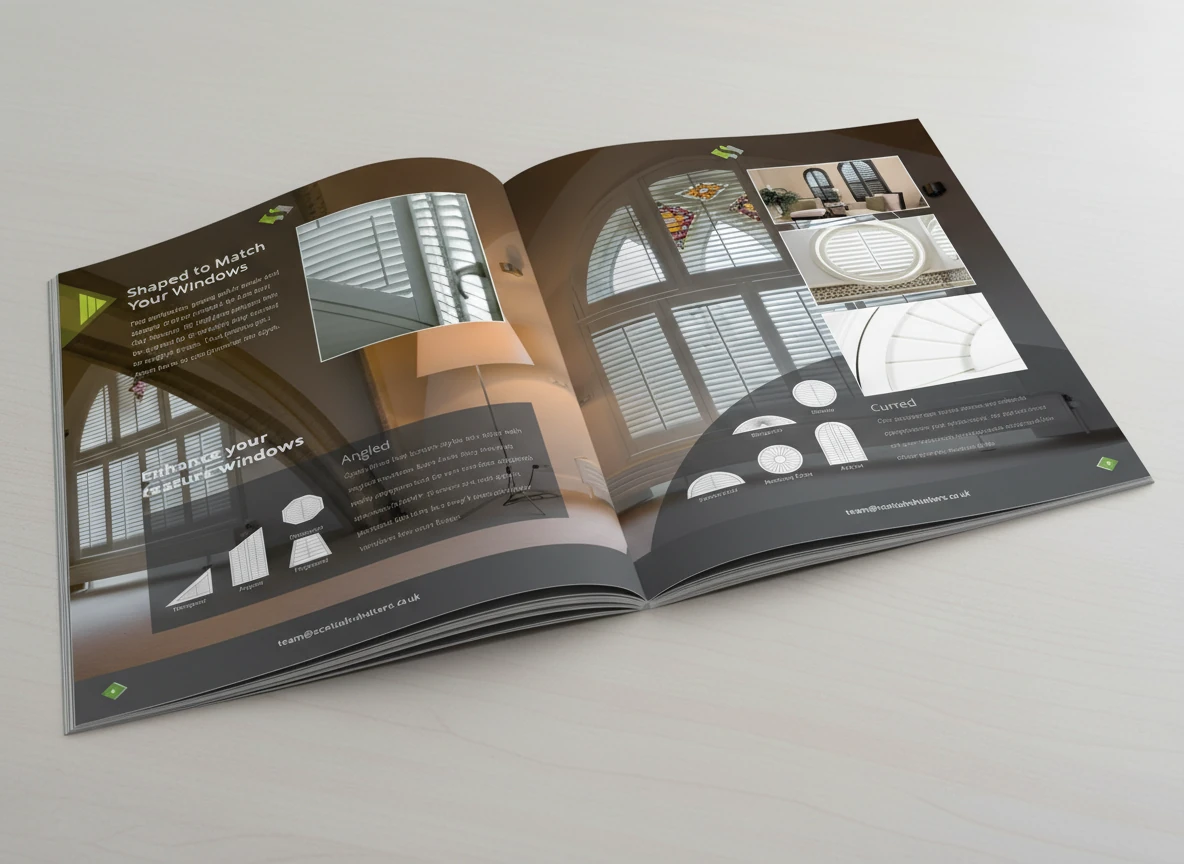
Start with our brochure
52 pages of ideas, product details, and real installations from homes across Scotland. Request your copy and take the first step.