
What Are Our Shutters Made Of? A Straight Answer, Material by Material
It’s the most sensible question a shutter buyer can ask, and the one our trade is often worst at answering plainly: what are your shutters actually made of?
We get asked it a lot, and the short version is this. We fit shutters in seven different materials, probably the largest range of any shutter company in Scotland: solid hardwood, premium engineered timber, hardwood and MDF hybrids, engineered MDF, high-grade ABS, dense solid faux-wood, and architectural aluminium. Seven material families, each with a job it does better than the others.
There’s exactly one material we won’t fit, and we’ll come to why.
But ‘what’s it made of’ deserves a fuller answer than a single line, because the material is the biggest single factor in how a shutter looks in ten years, which rooms it belongs in, and whether it’s still straight and quiet long after the fitter has driven away. So here is the complete picture, one material at a time.
Why the Material Matters More Than Anything Else
Two shutters can look identical in the Design Studio and behave completely differently two summers later. One holds its line for decades. The other sags on a sunny windowsill, or develops a musty smell in a bathroom, or quietly warps out of true.
The difference is almost never the colour, the louvre size, or the frame style you spent so long choosing. It’s the material, and the grade of that material. Get that right for the room, and the shutter looks after itself for years. Get it wrong, and no amount of careful fitting will save it.
That’s why we start every consultation with the room, the light, and the humidity, and only then talk finish. Here’s what we’re choosing between.
1. Solid Hardwood: The Fifty-Year Shutter
At the top of the range sits shutters built entirely from kiln-dried hardwood. The stained finishes use paulownia, a fast-growing hardwood with a high strength-to-weight ratio. The painted finishes are built from a combination of premium hardwoods including basswood and ayous.
Solid timber is the material these windows were originally designed for, and nothing else quite matches it for stiffness. That stiffness is exactly what you want for very wide panels on a south-facing window, for tall louvres in continuous direct sun, and for bespoke shapes like arches, gables and circles, where real wood is more forgiving to craft.
It’s also what listed building consent usually requires, and it’s the natural choice for anyone who wants their shutters to be a genuine lifetime investment. Well-made hardwood shutters, properly finished, will comfortably outlast most of the rest of the house.
2. Premium Engineered Timber: Wood, Re-Engineered Against Warping
There’s a newer category that takes real timber and re-engineers it specifically to resist the movement that natural wood can be prone to.
The stiles and rails (the structural parts of the panel) are built from finger-jointed, reverse-grain-laminated poplar, which gives a stable, strong core. The louvres are cut from lightweight paulownia, so the panel stays easy to tilt and operate. The whole thing is finished with a gesso coating over several topcoats, which reinforces the surface and gives an exceptionally smooth finish.
The result is a shutter with the warmth and authenticity of natural timber, engineered so that warping and twisting are virtually designed out. For customers who love the idea of wood but want modern dimensional stability, this is often the sweet spot.
3. Hardwood and MDF Hybrid: The Sensible Middle
Not every window needs a full solid-timber panel, and not every budget stretches to one. The hybrid construction pairs genuine hardwood panels with an engineered MDF frame.
You get the appearance and feel of timber where it shows, and the stability and value of engineered board in the frame. For a great many rooms in a typical home, north, east and west-facing windows in particular, this is a smart, good-value choice that looks every bit as good as the premium ranges.
4. Engineered MDF: Consistent and Affordable
At the accessible end of our timber-based options is engineered MDF throughout. It’s the most affordable route into quality made-to-measure shutters, and because it’s a manufactured board rather than natural wood, it’s beautifully consistent with no grain variation from panel to panel.
The one thing to know is that MDF is a dry-room material. It’s ideal for bedrooms, living rooms and hallways, and it’s not the right choice for a bathroom, kitchen or anywhere else where moisture is a daily fact of life. For those rooms, we move to a different family entirely.
5. High-Grade ABS: The Plastic That Behaves Like a Grown-Up
Here’s where we need to clear up the biggest misunderstanding in the whole trade. When someone says ‘plastic shutters’ or ‘faux wood’, that single phrase covers everything from the genuinely excellent to the frankly poor. They are not the same thing, and the price tag is often the only clue you’re given.
At the top of the plastic category sits ABS, acrylonitrile butadiene styrene. It’s the same family of plastic used for Lego bricks, motorcycle helmets, and the dashboards of cars that bake in summer car parks for years without deforming. It’s hard, dimensionally stable, and has a far higher heat deflection temperature than cheap vinyl, meaning it stays put on a warm windowsill instead of softening and sagging.
Crucially, ABS is not PVC. It’s a completely different polymer, and it behaves nothing like the soft vinyl at the bottom of the market. Our high-grade ABS ranges are engineered specifically as a robust alternative to bargain plastic, and they’re properly water resistant, which makes them our go-to for bathrooms, kitchens, and rooms with condensation. Across years of fitting them all over central Scotland, we have no record of heat warping on our ABS ranges.
6. Dense Solid Faux-Wood: The Good End of ‘Plastic’
Alongside ABS, we also offer a dense, solid faux-wood that’s manufactured here in the UK and finished with a professionally applied paint coat. It’s a high-stability material, roughly 600 kilograms per cubic metre, and the word that matters most there is ‘solid’.
This is a rigid, PVC-based faux-wood, and we’re not going to pretend otherwise, because the whole point of this article is to tell you exactly what we fit. But ‘PVC-based’ covers two very different things. The off-gassing concern covered in one of the articles linked below is about plasticised vinyl, the soft, flexible kind that has chemical plasticisers added to it to make it bend. A rigid, high-stability panel like this contains no such plasticiser to release, and it’s solid rather than hollow. Same broad family of chemistry, an entirely different material, and an entirely different product from the cheap hollow vinyl we describe next. It’s a durable, fast-turnaround option that looks like painted timber and stands up well to everyday life.
7. Architectural Aluminium: The All-Weather Option
Our seventh material is the outlier, and the toughest of the lot. It’s architectural-grade aluminium, the same 6063-T6 alloy used in commercial building facades, finished with a Qualicoat powder coat, which is the coating standard specified for curtain walling on office blocks.
It’s corrosion-resistant, fade-resistant and close to maintenance-free, with 89mm louvres and a silent tilt. It comes in four standard colours plus any custom RAL shade, and carries a five-year warranty fitted internally, three years externally.
What sets it apart is that it’s equally at home on either side of the glass. Inside, it’s a clean, contemporary, wipe-down alternative to timber. Outside, it’s genuinely weatherproof, which makes it our material of choice when a customer wants shutters that can take Scottish weather head-on and protect the glass while still looking considered. There’s more on the external application on our external aluminium shutters page.
For all that breadth, there’s still one material we won’t put on your windows, inside or out.
The One Thing We Won’t Fit: Bargain Thin-Wall Vinyl
At the very bottom of the market sits soft, cheap vinyl, sometimes labelled PVC, extruded into hollow tubes and pinned together into a panel. It looks fine on day one. It causes problems on a timescale just long enough to be past the point where anyone rushes back to fix it.
We won’t fit it, and we’ve written at length about exactly why:
- It bows and sags on sunny windows. Soft vinyl has a low heat deflection point, and an unsupported louvre in direct sun droops in the middle and never fully recovers. See When Shutters Bow to the Sun.
- ‘Waterproof’ hollow vinyl can grow mould inside its own chambers. Humid air condenses inside the hollow sections, sits there with no drainage, and eventually announces itself as a musty smell you can’t trace. See When ‘Waterproof’ Shutters Aren’t Waterproof.
- Heated plasticised PVC has a chemistry problem. There’s peer-reviewed research on what soft PVC can release when it sits in direct sunlight. See The Chemistry No One Wants to Talk About.
If you want the full story on the cheapest plastic shutters and why they cost more in the long run, we’ve pulled it all together at Plastic Shutters: What You Actually Need to Know.
The Real Lesson: Ask What Kind, Not Just Wood or Plastic
If you take one thing from all of this, take this. The biggest mistake homeowners make isn’t choosing plastic over wood. It’s not asking what kind of plastic, or what grade of wood.
The material name on its own tells you very little. A high-grade ABS panel and a dense solid faux-wood panel will still be doing their job long after a cheap hollow vinyl louvre has bowed, even though a less scrupulous salesperson might describe all three as ‘faux wood’. The grade and the construction tell you everything the label leaves out.
A reputable supplier will be perfectly comfortable telling you precisely which material they’re proposing, why they’ve chosen it for your particular room, and how it’s built. If someone can only tell you ‘it’s faux wood’ or ‘it’s a composite’, that vagueness is itself the answer.
Matching the Material to the Room
Here’s the shorthand we use ourselves:
- South-facing wall of glass, listed building, or a lifetime investment: solid hardwood, every time.
- Most rooms, timber look at a sensible price: engineered timber or a hardwood and MDF hybrid.
- Dry room on a tighter budget: engineered MDF.
- Bathroom, kitchen, wetroom, or anywhere with condensation: high-grade ABS or dense solid faux-wood.
- A contemporary metal finish, a wipe-clean surface, or shutters that can go outside: architectural aluminium.
- Anywhere at all: never bargain thin-wall vinyl.
Why Choose The Scottish Shutter Company
We’ve been fitting shutters across Edinburgh, Dundee and central Scotland for almost forty years, and one of the most important parts of our consultation is matching the right material to the right window rather than selling you whatever’s on offer this month. We work directly with premium manufacturers, and every installation is carried out by our own team, not subcontracted out to whoever’s free that week.
We’re full members of the British Blind and Shutter Association. Our Technical Director, David D’Ambrosio, is the BBSA’s go-to expert on shutters and a Past President of the Association. If anything ever does go wrong, you know exactly who to call, and that’s a promise a discount website simply can’t make.
Ready to Get It Right First Time?
If you’re weighing up shutters for any room in your home, and especially if you’ve been quoted by someone who couldn’t tell you what their product is actually made of, we’d love to help you make a properly informed choice.
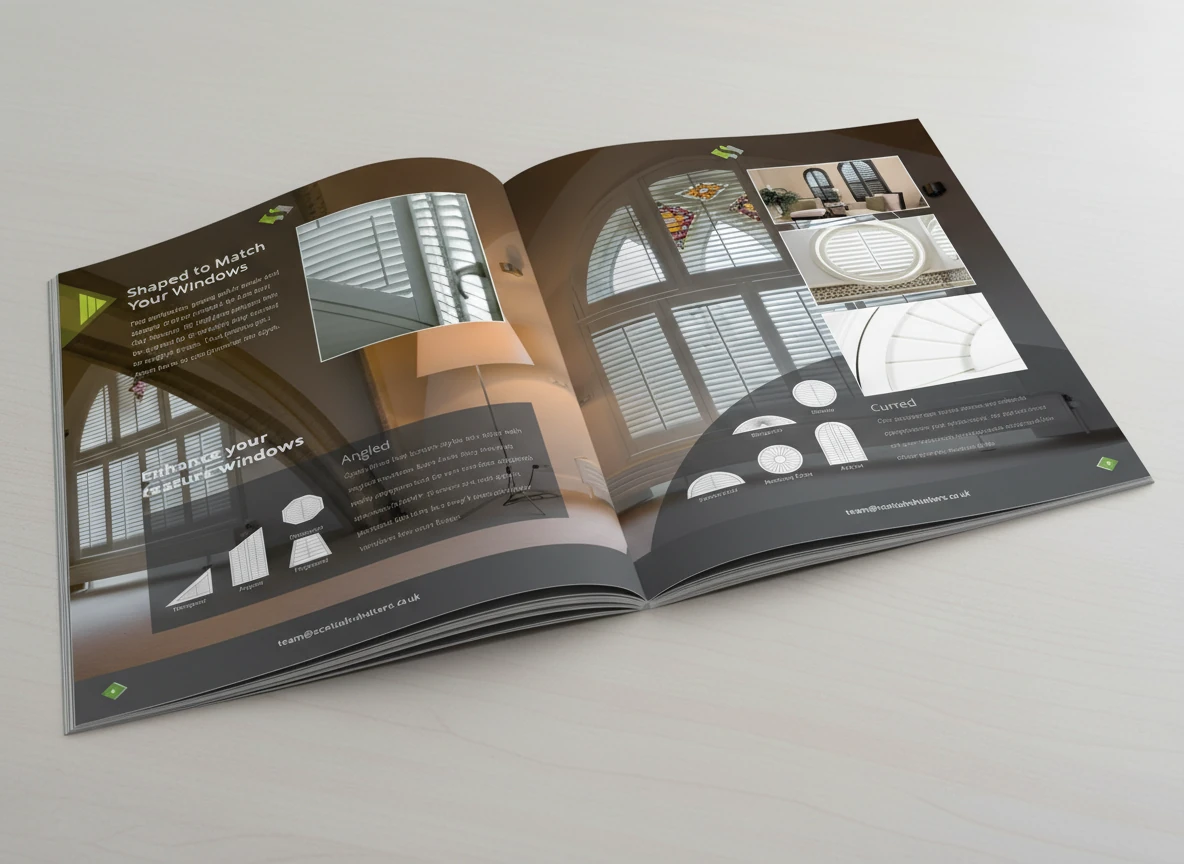
Contact us today for a free in-home consultation or download our brochure to see the full range, from premium hardwoods to genuinely durable water-resistant options.
Get it right once, and you won’t need to think about it again.
Inspired by what you've read?
Request a brochure or arrange a no obligation consultation.